

🎯 Why Kratom Enthusiasts Choose Jack Botanicals
AKA Certified Excellence | Pure, Potent & Priced Right
🎁 YOUR EXCLUSIVE CODE: JACK30 Saves You 30%!
Unlock Your Discount →You’re driving through the beautiful Palmetto State, perhaps heading to Charleston’s historic district or Myrtle Beach’s sandy shores, when you suddenly remember the kratom capsules in your glove compartment. Your heart skips a beat as you wonder – is kratom legal in South Carolina? This scenario plays out more often than you might think, as kratom’s legal status varies dramatically across the United States, leaving many users confused and concerned about potential legal consequences.
The botanical supplement kratom has gained significant attention in recent years, with millions of Americans incorporating it into their wellness routines. However, navigating the complex web of state and federal regulations can feel overwhelming. For South Carolina residents and visitors, understanding the current legal landscape is crucial for making informed decisions about kratom use.
- Kratom is currently legal in South Carolina with no state-level restrictions or bans in place
- The state has not passed any legislation specifically prohibiting kratom possession, sale, or use
- Federal regulations still apply, meaning kratom cannot be sold as a dietary supplement or for human consumption
- Age restrictions may apply at the retailer level, with most vendors requiring customers to be 18 or older
- Legal status can change – staying informed about potential legislative developments is essential
Understanding Kratom and Its Legal Complexity
Kratom, scientifically known as Mitragyna speciosa, is a tropical tree native to Southeast Asia. The leaves contain naturally occurring compounds called alkaloids, primarily mitragynine and 7-hydroxymitragynine, which interact with the body’s opioid receptors. This interaction has made kratom both popular among users seeking natural wellness solutions and controversial among regulators concerned about potential risks.
The legal landscape surrounding kratom is particularly complex because it exists in a regulatory gray area. Unlike many controlled substances, kratom has never been federally scheduled under the Controlled Substances Act, despite attempts by the Drug Enforcement Administration (DEA) to classify it as a Schedule I substance in 2016. However, this doesn’t mean kratom is completely unregulated – it simply means that individual states have taken different approaches to its legal status.
The Federal Perspective on Kratom
At the federal level, kratom occupies an unusual position. While not scheduled as a controlled substance, the Food and Drug Administration (FDA) has taken a cautious stance, issuing warnings about kratom’s safety and prohibiting its sale as a dietary supplement. The FDA has also banned the importation of kratom products that make health claims or are intended for human consumption.
This federal ambiguity has created a patchwork of state laws, with some states embracing kratom’s legal status while others have implemented complete bans. Understanding where South Carolina fits in this landscape requires examining both current state law and the broader regional trends.
Current Legal Status: Is Kratom Legal in South Carolina?
Yes, kratom is legal in South Carolina. The state has not enacted any legislation specifically prohibiting the possession, sale, or use of kratom products. This means that adults can legally purchase, possess, and use kratom throughout the Palmetto State without fear of state-level criminal prosecution.
South Carolina’s approach to kratom regulation has been relatively hands-off compared to some neighboring states. The state legislature has not introduced significant bills targeting kratom, and law enforcement agencies do not actively pursue kratom-related cases under state law. This legal status has allowed kratom vendors to operate openly throughout the state, from Columbia to Greenville to Charleston.
What This Means for Consumers
For South Carolina residents and visitors, kratom’s legal status provides several important freedoms:
- Possession: Adults can legally possess kratom products for personal use
- Purchase: Kratom can be bought from licensed retailers, both online and in physical stores
- Transportation: Traveling with kratom within state boundaries is legal
- Use: Consuming kratom products is not prohibited under state law
However, it’s important to note that while state law permits kratom use, individual employers, schools, or other organizations may have their own policies regarding kratom. Always check relevant policies before assuming kratom use is acceptable in specific contexts.
South Carolina Kratom Legal Status
Current regulations and important information
Kratom is currently legal in South Carolina with no state-level restrictions.
- Federal regulations still apply
- Age restrictions may apply at retailer level
- Employer policies may vary
- Legal status subject to change
Neighboring States Comparison
Understanding South Carolina’s kratom laws becomes clearer when compared to neighboring states. The southeastern United States presents a mixed landscape of kratom regulations, with some states embracing legal access while others have implemented strict prohibitions.
Legal States in the Region:
- North Carolina: Kratom remains legal with no state restrictions
- Georgia: Legal statewide, though some local municipalities have enacted bans
- Tennessee: Legal for adults 21 and older with regulatory framework
States with Restrictions:
- Alabama: Kratom is completely banned and classified as a controlled substance
This regional variation highlights the importance of understanding local laws, especially for travelers who may cross state lines with kratom products. While kratom remains legal in many states, the patchwork of regulations requires careful attention to current laws.
Historical Context and Legislative Attempts
✅ Discover What Makes Jack Botanicals Different
AKA Approved Standards | Lab-Verified Purity | Unmatched Customer Support
💎 READER EXCLUSIVE: JACK30 = 30% Off Storewide
Start Saving Today →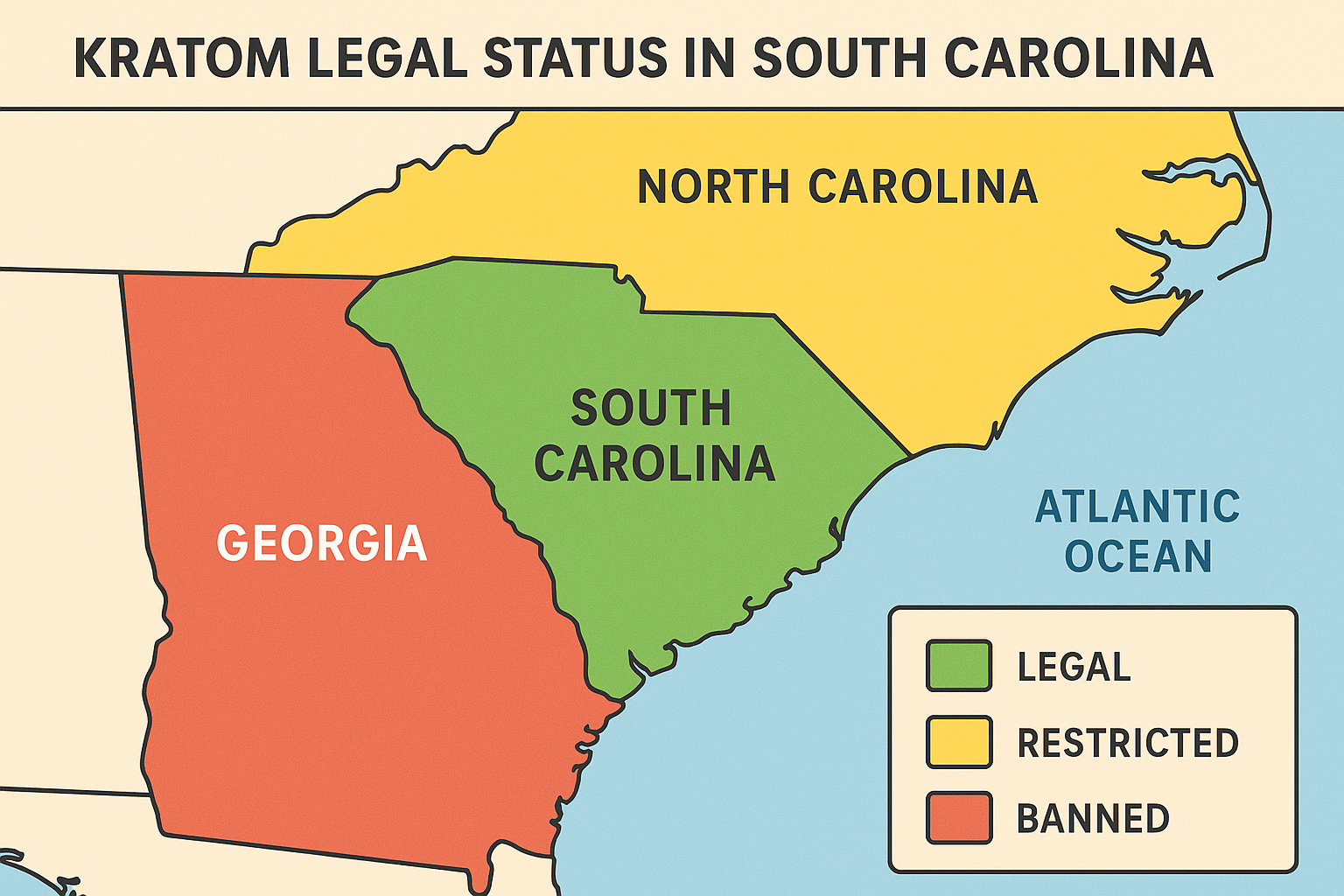
South Carolina’s current permissive stance on kratom hasn’t always been guaranteed. Like many states, South Carolina has seen occasional legislative interest in kratom regulation, though no significant restrictions have been enacted to date.
Past Legislative Activity
Several factors have contributed to South Carolina’s relatively stable legal environment for kratom:
- Limited Legislative Pressure: Unlike states such as Alabama or Wisconsin, South Carolina hasn’t experienced sustained legislative campaigns to ban kratom
- Law Enforcement Priorities: State and local law enforcement have generally focused on other substances deemed higher priority
- Advocacy Efforts: Kratom advocacy groups have maintained active engagement with state legislators
- Economic Considerations: The kratom industry provides jobs and tax revenue through legitimate businesses
Federal Influence on State Policy
South Carolina’s approach to kratom has also been influenced by federal developments. The DEA’s 2016 attempt to emergency schedule kratom, which was later withdrawn due to public opposition, demonstrated the contentious nature of kratom regulation. This federal uncertainty has led many states, including South Carolina, to maintain status quo policies rather than enacting premature restrictions.
Where to Buy Kratom in South Carolina
With kratom’s legal status established, South Carolina residents have access to various purchasing options. The state hosts numerous kratom vendors, from small local shops to larger regional chains. However, not all kratom sources are created equal, and understanding how to identify quality vendors is crucial for safety and satisfaction.
Types of Kratom Retailers
Smoke Shops and Head Shops: Many traditional tobacco and smoking accessory stores carry kratom products. While convenient, these retailers may not specialize in kratom and might carry lower-quality products.
Specialty Kratom Stores: Some businesses focus exclusively on kratom and botanical products. These vendors often provide better product knowledge and quality control.
Online Vendors: Purchasing kratom online offers the widest selection and often the best prices. Reputable online vendors typically provide detailed product information, lab testing results, and customer reviews.
What to Look for in a Quality Vendor
When selecting a kratom vendor in South Carolina, consider these important factors:
Lab Testing: Reputable vendors provide third-party lab testing results showing their products are free from contaminants like heavy metals, pesticides, and harmful bacteria.
Product Information: Quality vendors clearly label their products with strain information, alkaloid content, and sourcing details.
Customer Service: Knowledgeable staff who can answer questions about different strains and effects indicate a professional operation.
Return Policy: Legitimate vendors stand behind their products with reasonable return and refund policies.
Popular kratom strains available in South Carolina include traditional varieties like Gold Malay kratom and Yellow Malay kratom, which offer unique alkaloid profiles and effects.
Age Restrictions and Purchase Requirements
While South Carolina doesn’t impose state-level age restrictions on kratom purchases, most retailers voluntarily enforce minimum age requirements. This practice reflects industry standards and helps demonstrate responsible business practices.
Common Age Requirements
18+ Standard: Most kratom vendors require customers to be at least 18 years old, treating kratom similarly to tobacco products.
21+ Policies: Some retailers, particularly those also selling CBD or other wellness products, may require customers to be 21 or older.
ID Verification: Legitimate vendors typically require valid photo identification for both in-person and online purchases.
Why Age Restrictions Matter
Age restrictions serve several important purposes:
- Safety: Ensuring adult decision-making capacity for substance use
- Legal Protection: Protecting businesses from potential liability
- Industry Standards: Maintaining professional standards within the kratom community
- Regulatory Compliance: Preparing for potential future regulations
Potential Future Changes to South Carolina Kratom Laws
While kratom currently enjoys legal status in South Carolina, the regulatory landscape can shift. Understanding potential future changes helps users stay informed and prepared for possible legal developments.
Factors That Could Influence Future Legislation
Federal Action: Any federal scheduling or regulation of kratom would supersede state laws and could dramatically change the legal landscape.
Public Health Concerns: Reports of adverse events or safety issues could prompt legislative action.
Advocacy Efforts: Both pro-kratom and anti-kratom advocacy groups continue working to influence policy.
Economic Impact: The growing kratom industry’s economic contribution may influence lawmakers’ decisions.
Signs to Watch For
South Carolina kratom users should monitor several indicators of potential legal changes:
- Legislative bill introductions during the state’s annual sessions
- Public hearings or committee discussions about kratom
- Law enforcement advisories or policy changes
- Federal regulatory developments
Staying informed about these developments helps ensure compliance with any future legal changes.
Safety Considerations and Responsible Use
Legal access to kratom in South Carolina comes with the responsibility to use it safely and appropriately. Understanding proper usage, potential interactions, and safety precautions helps ensure positive experiences while minimizing risks.
Understanding Kratom Effects and Timing
Different kratom strains and dosages can produce varying effects. Understanding how long kratom takes to work helps users make informed decisions about timing and dosage. Generally, kratom effects begin within 15-30 minutes of consumption and can last 3-6 hours depending on various factors.
Responsible Usage Guidelines
Start Low: New users should begin with small amounts to assess individual tolerance and response.
Stay Hydrated: Kratom can be dehydrating, so maintaining adequate fluid intake is important.
Avoid Mixing: Combining kratom with alcohol or other substances can increase risks and unpredictable effects.
Regular Breaks: Taking periodic breaks from kratom use can help prevent tolerance development.
When to Seek Help
While many people use kratom without issues, some may develop problematic usage patterns. Resources for those looking to quit kratom are available for individuals who want to discontinue use or feel their usage has become problematic.
Frequently Asked Questions
Common questions about kratom legality in South Carolina
Quality Control and Lab Testing
One advantage of kratom’s legal status in South Carolina is the ability for vendors to operate transparently and implement quality control measures. Reputable vendors often provide detailed information about their products, including laboratory testing results that verify purity and potency.
Understanding Lab Testing
Contaminant Screening: Quality vendors test for heavy metals, pesticides, and microbial contaminants that could pose health risks.
Alkaloid Analysis: Some vendors provide alkaloid content information, helping users understand product potency.
Batch Tracking: Professional operations maintain detailed records of product sourcing and testing for each batch.
Red Flags to Avoid
When shopping for kratom in South Carolina, be cautious of vendors who:
- Make specific medical or health claims about their products
- Cannot provide lab testing results or certificates of analysis
- Sell products with suspicious labeling or packaging
- Offer prices that seem too good to be true
- Lack proper business licenses or contact information
Working with reputable vendors like Best Buy Botanicals or Benni Botanicals helps ensure access to quality-tested products from established businesses.
Economic Impact of Kratom in South Carolina
Kratom’s legal status has allowed a legitimate industry to develop within South Carolina, contributing to the state’s economy through job creation, tax revenue, and business development. Understanding this economic impact provides context for why maintaining legal access benefits the state.
Industry Growth and Employment
The kratom industry in South Carolina includes:
- Retail Operations: Brick-and-mortar stores employing sales staff and managers
- Distribution Centers: Warehousing and logistics operations
- Online Businesses: E-commerce companies serving local and national markets
- Supporting Services: Legal, accounting, and marketing services for kratom businesses
Tax Revenue Generation
Legal kratom businesses contribute to South Carolina’s economy through:
- State and local sales taxes on retail transactions
- Business license fees and permits
- Property taxes on commercial facilities
- Income taxes from employees and business owners
This economic activity provides tangible benefits to communities throughout South Carolina while supporting legitimate business operations.
Consumer Protection and Market Regulation
While South Carolina doesn’t have specific kratom regulations, existing consumer protection laws still apply to kratom vendors. Understanding these protections helps consumers make informed purchasing decisions and know their rights.
Existing Legal Protections
False Advertising Laws: Vendors cannot make false or misleading claims about their products.
Consumer Protection Act: South Carolina’s consumer protection laws apply to kratom transactions, providing recourse for fraudulent or deceptive business practices.
Business Licensing: Legitimate kratom vendors must obtain appropriate business licenses and comply with local zoning requirements.
Industry Self-Regulation
Many kratom vendors voluntarily adopt industry best practices, including:
- Membership in trade organizations like the American Kratom Association
- Adherence to Good Manufacturing Practices (GMP)
- Implementation of quality control standards
- Participation in industry advocacy efforts
These self-regulation efforts help maintain industry credibility and may influence future regulatory approaches.
Medical and Research Considerations

While kratom remains legal in South Carolina, it’s important to understand the current state of medical research and FDA positions regarding kratom use. This information helps users make informed decisions about incorporating kratom into their wellness routines.
Current Research Status
Scientific research on kratom is ongoing, with studies examining:
- Alkaloid pharmacology: How kratom’s active compounds interact with the body
- Safety profiles: Understanding potential risks and side effects
- Therapeutic potential: Investigating possible medical applications
- Usage patterns: Studying how people use kratom in real-world settings
FDA Position and Medical Claims
The FDA has consistently warned against making medical claims about kratom products. This means that while kratom is legal to sell and purchase, vendors cannot market it as a treatment for any medical condition. Consumers should be wary of any vendor making specific health claims about their kratom products.
Consulting Healthcare Providers
Individuals considering kratom use, especially those with existing health conditions or taking medications, should consult with healthcare providers. While not all medical professionals are familiar with kratom, open communication about substance use helps ensure safe and informed decision-making.
Interstate Travel and Legal Considerations
South Carolina’s permissive kratom laws provide freedom within the state, but travelers must be aware of varying regulations in other jurisdictions. Understanding interstate legal differences is crucial for anyone planning to travel with kratom.
Neighboring State Considerations
When traveling from South Carolina to neighboring states, kratom users should be aware of different legal landscapes:
Legal Destinations: States like North Carolina and Georgia generally allow kratom, though local ordinances may vary.
Restricted Areas: Some states have age restrictions or regulatory frameworks that differ from South Carolina’s approach.
Prohibited States: States like Alabama have complete kratom bans, making possession illegal regardless of where it was purchased.
Travel Safety Tips
For safe interstate travel with kratom:
- Research Destination Laws: Always verify the legal status of kratom in your destination state
- Check Local Ordinances: Some cities or counties may have restrictions even in states where kratom is generally legal
- Proper Labeling: Keep kratom in original packaging with clear labeling
- Reasonable Quantities: Travel with personal-use amounts rather than large quantities
Similar legal considerations apply when traveling to states with different kratom regulations, such as Arizona, where understanding local laws is essential.
Community and Advocacy
South Carolina’s kratom community includes users, vendors, and advocates who work to maintain legal access and promote responsible use. Understanding this community structure helps new users connect with resources and information.
Advocacy Organizations
Several organizations work to protect kratom access:
- American Kratom Association (AKA): National organization providing legal updates and advocacy
- Local Advocacy Groups: State and regional organizations focused on South Carolina-specific issues
- Vendor Associations: Trade groups promoting industry standards and best practices
Staying Informed
Kratom users in South Carolina can stay informed through:
- Regular monitoring of state legislative sessions
- Subscription to advocacy organization newsletters
- Participation in local kratom community groups
- Following reputable kratom news sources and vendors
Active community engagement helps ensure that kratom users have a voice in potential future regulatory discussions.
Conclusion
Is kratom legal in South Carolina? The answer is a clear yes – kratom remains fully legal throughout the Palmetto State with no state-level restrictions on possession, sale, or use. This legal status has allowed South Carolina residents to access kratom products freely while supporting a legitimate industry that contributes to the state’s economy.
However, kratom’s legal landscape requires ongoing attention and awareness. While South Carolina currently maintains permissive laws, the regulatory environment can change based on federal developments, state legislative action, or shifting public opinion. Staying informed about potential changes helps ensure continued compliance with applicable laws.
For those interested in purchasing kratom in South Carolina, focusing on reputable vendors who provide quality testing, clear product information, and professional service ensures the best experience. Whether shopping locally or buying kratom online, prioritizing quality and safety protects both individual users and the broader kratom community.
Avery Bennett is a cultural researcher and nature enthusiast with a special interest in the rituals and beliefs surrounding plant life. She has studied how communities across the globe have used the natural world as part of their daily customs and seasonal transitions. Avery’s approach to learning is experiential—visiting local gatherings, observing folk practices, and engaging with tradition keepers. She believes that every plant carries a story that reflects the resilience, spirituality, and creativity of the people who use it. Avery focuses on highlighting these stories through educational content that honors cultural legacy, promotes sustainability, and encourages respectful curiosity.


