

🎯 Why Kratom Enthusiasts Choose Jack Botanicals
AKA Certified Excellence | Pure, Potent & Priced Right
🎁 YOUR EXCLUSIVE CODE: JACK30 Saves You 30%!
Unlock Your Discount →More than a thousand botanical lounges have opened across the United States in the past several years, selling tea, shots and capsules made from a Southeast Asian leaf instead of alcohol. So what is a kratom bar, exactly, and why are these spaces showing up in college towns and strip malls alike? A kratom bar is a retail venue built around on-site consumption of kratom drinks and products, usually served by staff who can explain strain differences, much like a barista explains coffee roast levels. This article breaks down what is a kratom bar in practice, what you can order, how much it costs, which laws apply, and what the real risks and benefits look like.
What Is Kratom and Where Does It Come From
Kratom comes from the leaves of Mitragyna speciosa, a tropical tree native to Southeast Asia, particularly Indonesia, Thailand, Malaysia and Papua New Guinea. The dried leaves are ground into powder or brewed as tea, and the plant has a long history of traditional use among farmers and laborers in the region for energy and recovery after physical work.
✅ Discover What Makes Jack Botanicals Different
AKA Approved Standards | Lab-Verified Purity | Unmatched Customer Support
💎 READER EXCLUSIVE: JACK30 = 30% Off Storewide
Start Saving Today →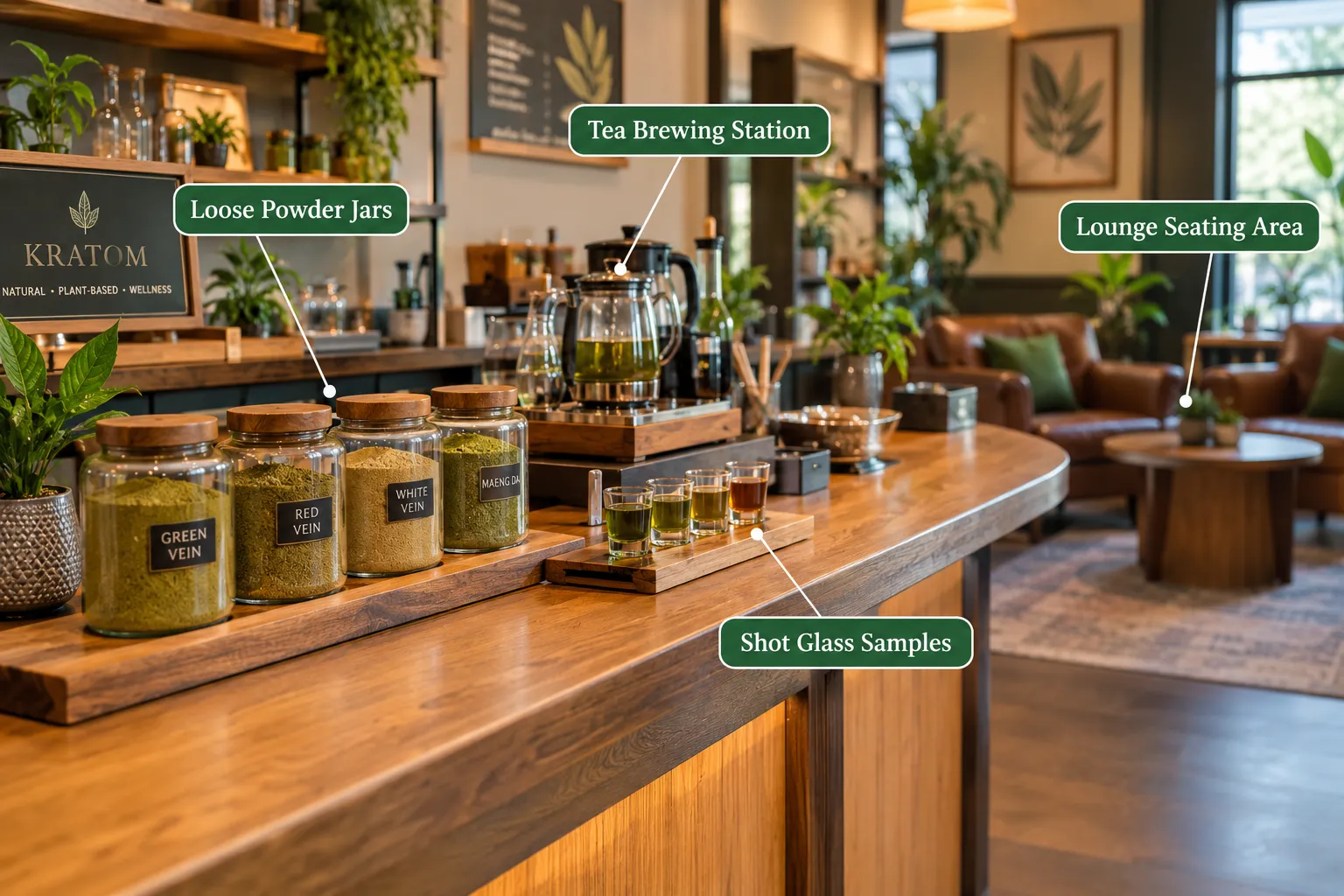
Commercial kratom sold in the United States is almost always imported leaf that has been dried, crushed, and sometimes formed into capsules or extracts. The active compounds, mitragynine and 7-hydroxymitragynine, interact with opioid receptors in the brain, which explains both the pain-relieving effects people report and the regulatory scrutiny the plant has attracted. Vein color (red, white, green or yellow) refers to the color of the leaf’s veins at harvest and is used to predict general effects, though growing region and processing also matter a great deal.
What Is a Kratom Bar and How Do Kratom Bars Work
A kratom bar is a dedicated storefront where customers buy and consume kratom-based drinks on-site, rather than only purchasing powder or capsules to take home. The model borrows directly from the coffee shop and juice bar format: a counter, a visible menu, staff who mix drinks to order, and a seating area meant for lingering [1].
Operationally, most kratom bars work like this:
- Sourcing: Bulk kratom powder and extract are purchased from wholesale suppliers, then stored in labeled jars or bins behind the counter.
- Preparation: Staff measure doses by the gram and mix powder into water, juice, or a proprietary tea blend, or pour pre-made kratom shots from bottles.
- Service: Customers order by strain name or desired effect (“something relaxing” or “something for focus”) rather than by brand alone.
- Repeat visits: Many locations build loyalty programs or happy-hour pricing similar to a traditional cafe [2][4].
Inside a Modern Kratom Bar
This is a meaningfully different retail model from a smoke shop or online vendor. A kratom bar sells an experience and a controlled serving, not just a bag of product, which is part of why industry voices frame these venues as a “controlled environment” compared with buying loose powder and dosing it yourself at home.
What Do You Get at a Kratom Bar: Kratom Tea, Shots, Capsules and More
Most kratom bar menus center on drinkable formats, with capsules and powder sold as takeaway options. The goal is variety across strength, flavor, and onset speed so customers can match the product to the occasion.
Typical menu items include:
- Kratom tea: Brewed loose-leaf kratom, often blended with citrus or honey to offset the bitter taste.
- Kratom shots: Small, concentrated liquid kratom servings meant for a fast, strong effect.
- Kratom capsules: Pre-measured doses for customers who want consistency without tasting the powder.
- Kratom powder: Sold by the gram or ounce for home brewing, often available in bulk kratom quantities for regular customers.
- Kratom gummies: A sweeter, slower-onset edible format that has grown popular with newer users; see this breakdown of kratom gummies safety and dosage before trying one.
- Kratom vape and liquid kratom: Less common, but some bars carry vape-compatible extracts for customers who prefer inhalation over drinking.
- Buy kratom extract: Concentrated extracts for experienced users seeking stronger effects from a smaller volume.
Some locations also offer free kratom samples for first-time visitors, a practice carried over from juice bars and supplement shops trying to build trust with a skeptical new customer [4].
Kratom Bar vs Buying Kratom Online: What Is the Real Difference
The core difference is experience versus convenience: a kratom bar gives you an immediate, prepared drink and in-person guidance, while buying kratom online gives you better pricing, wider strain selection, and lab-tested bulk options. Neither format is inherently “better”; they solve different problems.
| Factor | Kratom Bar | Buying Kratom Online |
|---|---|---|
| Convenience | Ready to drink on-site | Ships in days, you prepare it |
| Price per dose | Higher (service markup) | Lower, especially in bulk kratom orders |
| Strain variety | Limited to in-stock menu | Wide range of kratom strains |
| Lab testing | Varies by location | Best kratom brands publish third-party results |
| Guidance | Staff recommend doses | Self-research, forums like Kratom Reddit |
| Best for | Trying new strains, social setting | Regular users, best place to buy kratom for value |
If you are curious about kratom but nervous about dosing it yourself, a bar visit is a reasonable low-commitment starting point. If you already know your preferred strain and dose, buying kratom online through established vendors is almost always cheaper per serving. A common mistake is assuming bar staff are medically trained; most are trained on products, not pharmacology, so treat their advice as product knowledge rather than clinical guidance.
Is a Kratom Bar Legal Where I Live
Kratom’s legal status varies by state and even by city, so “is a kratom bar legal where I live” has no single national answer. Kratom remains legal at the federal level in the United States, but several states and municipalities restrict or ban it outright.
- Florida has moved toward labeling requirements and age restrictions for kratom products, requiring clear disclosure of mitragynine content and limiting sales to adults.
- Texas generally allows kratom sales, though local ordinances can differ; see this breakdown of Texas kratom laws and regulations before opening or visiting a bar there.
- California, Oregon, and Idaho each have different rules: some California cities have local bans despite state-level allowance, Oregon largely permits sales, and parts of Idaho restrict kratom more heavily than neighboring states.
- Massachusetts moved toward an emergency restriction on kratom sales in 2026 after state health officials raised safety concerns, a move that drew a legal challenge from industry groups arguing the ban bypassed normal rulemaking.
Because rules shift quickly, always check current state and city ordinances before assuming a kratom bar near you is operating legally, and never assume one state’s rules apply to another.
How Much Does Kratom Cost at a Kratom Bar
Expect to pay more per serving at a bar than you would buying bulk powder online, since you are paying for preparation, convenience, and atmosphere rather than just raw product. A single kratom tea or shot at a bar commonly runs in the range of a specialty coffee drink, while takeaway capsules or bagged powder cost closer to retail supplement pricing. Bulk kratom purchased online in larger quantities brings the per-gram cost down significantly, which is why regular users often use bars for sampling new strains and switch to online bulk orders for their everyday supply.
Quick Comparison: Sampling vs Everyday Use
Choose a kratom bar visit if you want to try two or three strains in one sitting with guidance. Choose online bulk kratom if you already know your preferred strain and want the lowest cost per dose for ongoing use.
What Are the Effects of Kratom
Kratom’s effects depend heavily on vein color and dose, ranging from mild stimulation at lower amounts to sedation and pain relief at higher amounts. This is why a basic kratom strains chart is useful before ordering anything at a bar.
- Red vein kratom (red maeng da kratom, red bali kratom, red borneo kratom, red bentuangie kratom, red hulu kapuas kratom, red indo kratom, red sumatra kratom, red thai kratom, red dragon kratom, red horn kratom): generally associated with relaxation, calming effects, and use cases around kratom for chronic pain.
- White vein kratom (white maeng da kratom, white borneo kratom, white bali kratom, white sumatra kratom): tends to be more stimulating, often chosen for focus and energy.
- Green vein kratom (green maeng da kratom, green bali kratom, green malay kratom, green borneo kratom, green hulu kapuas kratom): often described as a middle ground between red and white effects.
- Yellow and specialty strains (yellow vietnam kratom, super indo kratom): typically marketed as smoother or milder options.
People researching best kratom for anxiety or best kratom for pain frequently turn to red and green strains, while those seeking an energy boost gravitate toward white vein kratom. Community discussion on Kratom Reddit often echoes this general pattern, though individual response varies and no strain works identically for everyone.
Best Kratom Strains for Beginners
New users generally do better starting with a moderate, well-known strain rather than the strongest extract on the menu. Maeng da kratom, in its red, white, and green forms, is the most commonly recommended starting point because of its balanced profile and wide availability.
Kratom Strain Color Chart
| Strain | Vein Color | Common Use | Beginner Friendly |
|---|---|---|---|
| Red Maeng Da Kratom | Red | Relaxation, pain focus | Yes |
| White Maeng Da Kratom | White | Energy, focus | Yes |
| Green Malay Kratom | Green | Balanced mood | Yes |
| Red Bali Kratom | Red | Calming | Yes |
| White Borneo Kratom | White | Mild energy | Moderate |
| Super Indo Kratom | Green/White | Smooth, versatile | Yes |
One former bar regular described a first visit this way: “I walked in expecting something closer to a smoke shop, and instead it felt like a smoothie counter. The person behind the counter asked what I wanted help with, suggested a green Malay tea for a mild afternoon lift, and talked me through the dose before I paid. It was low-key, and nobody rushed me out once I sat down to drink it.”
For readers specifically researching origin and effect patterns, this deeper look at Bali kratom origins, effects, and vein colors is a useful next read, as is this guide to trusted vendors for Maeng Da kratom if you want to buy the same strain online after trying it at a bar.
Kratom Bar Side Effects, Risks and Is Kratom Addictive
Kratom carries real side effect risks, and regular heavy use can lead to dependence, which is why “is kratom addictive” is one of the most searched questions about the plant. Common short-term side effects include nausea, dizziness, and digestive discomfort, especially at higher doses or on an empty stomach.
Longer-term and bar-specific risks worth knowing:
- Dependence: Mitragynine acts on opioid receptors, and daily high-dose use can produce withdrawal symptoms similar to mild opioid withdrawal; see this overview of what helps with kratom withdrawal if you or someone you know is cutting back.
- Inconsistent potency: Unlike a regulated pharmacy, a kratom bar’s product strength can vary between batches, making it harder to judge a safe dose.
- Synthetic contamination concerns: Health officials in states including Pennsylvania have raised alarms over concentrated kratom-derived synthetic compounds sold alongside traditional leaf products, which carry a higher overdose and dependence risk than plain leaf kratom.
- Campus safety scrutiny: Investigations at universities, including reporting tied to the University of Mississippi in 2026, have examined kratom and other substances in connection with student safety incidents near bars and dorms, prompting some campuses to tighten rules around off-campus venues [7].
A common mistake is treating kratom as risk-free because it is plant-based and sold openly. Plant origin does not equal low risk, and the same caution applied to any psychoactive substance should apply here.
Who Shouldn’t Use Kratom
Kratom is not appropriate for everyone, and certain groups face higher risk from using it at all. Pregnant or breastfeeding individuals, people with a history of substance use disorder, people taking opioid medications or other central nervous system depressants, and people with liver or heart conditions should avoid kratom or only use it under medical supervision.
Additional groups who should be cautious:
- Anyone under the legal age limit set by their state or city.
- Anyone driving or operating machinery shortly after use, given the sedating effects of higher doses.
- Anyone already managing anxiety or mood disorders with prescription medication, since interactions are not well studied.
If you fall into any of these categories, skip the bar visit and talk to a healthcare provider first rather than experimenting based on menu descriptions.
How Do I Use Kratom at a Kratom Bar
Using kratom at a bar is straightforward: you tell staff your experience level and desired effect, they recommend a strain and format, and you consume it on-site or take a packaged portion home. First-time visitors should start with the lowest suggested dose, avoid mixing with alcohol, and wait at least 30 to 45 minutes before deciding whether a second serving is needed.
A practical first-visit checklist:
- Mention that you are new to kratom when you order.
- Ask what vein color is in the drink and roughly how many grams it contains.
- Start with tea or a half shot rather than a full extract shot.
- Avoid ordering kratom capsules and a drink in the same visit until you know your tolerance.
- Sit down for at least 20 minutes before driving or leaving.
Kratom Vein Color Finder
Tap a goal to see which vein color kratom bars usually recommend.
Kratom Near Me: Finding a Kratom Bar in Your City
Kratom bars cluster in cities with permissive local rules and visible foot traffic, including college towns and downtown entertainment districts. Searching “kratom near me” or “where can I buy kratom” typically surfaces a mix of dedicated bars, smoke shops, and specialty supplement stores, so it pays to check reviews and ask about lab testing before choosing a location.
Regional patterns worth knowing:
- West Coast: Buy kratom in San Francisco and Buy Kratom in California generally means navigating a patchwork of city-level rules, since state law allows sales but some municipalities restrict them.
- Pacific Northwest: Buy Kratom in Oregon and visiting kratom shops in Portland is relatively straightforward under current state law.
- Mountain West: Buy Kratom in Idaho requires extra caution, since some counties restrict sales even where state law permits them.
- Texas and the South: Buy kratom in Texas, buy kratom in Houston, buy kratom in Dallas, and buy kratom in Austin are all generally allowed, though local ordinances can add age or labeling rules.
- Other hubs: Buy kratom in Louisville, buy kratom in Massachusetts, and buy kratom in Pittsburgh each carry different restrictions, and Best Local Kratom Vendors in Phoenix Arizona is a common search for travelers passing through the Southwest.
Avoid relying only on best gas station kratom options, since convenience-store kratom products often lack the labeling, dosing transparency, and strain variety you get at a dedicated bar or from best kratom brands sold through established vendors. Reviews and community threads on Kratom Reddit can help you spot kratom brands to stay away from before you waste money on a low-quality product.
Edge Case: Traveling Between States
If you buy kratom in one state and travel to another, check that state’s rules before carrying it across lines. A product legal in Texas or Oregon may not be legal to possess in a state with an active ban, such as current restrictions discussed in Massachusetts.
Can You Get Kratom at Regular Bars
No, standard alcohol-serving bars do not typically sell kratom, since alcohol and kratom are regulated under different licensing systems and most liquor licenses do not cover botanical drink sales. Dedicated kratom bars are alcohol-free by design, which is part of their appeal to customers looking for a social venue without drinking.
Some smoke shops and juice bars have added a small kratom menu alongside their main offerings, but this is different from a purpose-built kratom bar, which centers its entire business model, staff training, and seating layout around kratom service.
Kratom Dosage Effects at a Glance
- 1 to 2 grams: mild stimulation, light mood lift, minimal sedation.
- 2 to 4 grams: balanced energy and calm, common starter range.
- 4 to 6 grams: stronger relaxation, notable pain relief, mild sedation.
- 6 grams or more: heavy sedation, higher nausea risk, not beginner-appropriate.
Kratom Bar Questions Answered
What is a kratom bar in simple terms
A kratom bar is a storefront that sells kratom tea, shots, capsules, and powder for on-site drinking, staffed by people who help customers choose a strain and dose.
Is kratom legal in most states
Kratom is legal at the federal level and in most states, but several states and cities restrict or ban it, so local law always takes priority over general assumptions.
How much kratom should a beginner take
Most beginners start between 1 and 2 grams to gauge tolerance before trying a full standard serving of 2 to 4 grams.
Can you mix kratom with alcohol at a bar
No, kratom bars are alcohol-free venues, and mixing kratom with alcohol at home is not recommended due to increased sedation risk.
Is kratom addictive with regular use
Daily high-dose use can lead to physical dependence and withdrawal symptoms, similar in pattern to mild opioid withdrawal.
What is the difference between red, white, and green kratom
Red vein kratom tends to be calming, white vein kratom tends to be stimulating, and green vein kratom sits between the two.
Is it cheaper to buy kratom online or at a bar
Buying kratom online in bulk is almost always cheaper per dose than ordering drinks at a bar, which charges for preparation and service.
Who should avoid kratom entirely
Pregnant individuals, people with a substance use history, and anyone taking opioid or sedative medication should avoid kratom or consult a doctor first.
Conclusion
A kratom bar is, at its core, a botanical drink counter built for on-site consumption, guided sampling, and social atmosphere, not a replacement for a licensed clinic or a loosely regulated smoke shop. Understanding what is a kratom bar means understanding both the appeal (approachable staff, measured doses, a wide kratom strains chart to choose from) and the real risks (inconsistent potency, dependence potential, and shifting state laws). Before visiting one, confirm local legality, start with a low dose of a beginner-friendly strain like Maeng Da kratom, and treat any staff recommendation as product knowledge rather than medical advice. If a bar visit sparks interest in longer-term use, research reputable online vendors, read lab results, and set a personal dosing limit before buying in bulk.
References
[1] What Is A Kratom Bar – https://www.thegreendragoncbd.com/blog/what-is-a-kratom-bar
[2] What Is A Kratom Bar – https://katsbotanicals.com/what-is-a-kratom-bar/
[4] Everything You Can Know About Kratom Bars Origins Benefits Menu And More – https://happyhippo.com/blogs/kratom-blog/everything-you-can-know-about-kratom-bars-origins-benefits-menu-and-more
[7] Ole Miss Deaths Druggings People Scared Leave Dorms Bars Greek Life Clamp Down Students – https://www.foxnews.com/us/ole-miss-deaths-druggings-people-scared-leave-dorms-bars-greek-life-clamp-down-students
Caleb Foster is a self-described earth learner with a fascination for traditional living systems and the spiritual role of nature across cultures. He has participated in heritage walks, studied ancient texts, and spoken with keepers of tradition to understand the intersection of plants, ceremony, and identity. Caleb believes that learning from the past is essential to living more intentionally in the present. His interests include seasonal observances, indigenous land practices, and communal rituals rooted in nature. Caleb offers a perspective that respects origin stories and celebrates the many ways humans have engaged with the plant world for connection and meaning.
- Caleb Foster

- Caleb Foster

- Caleb Foster

- Caleb Foster

Hailey Cooper grew up surrounded by gardens and grandmothers who taught her to see plants as more than just living things. Over time, this upbringing evolved into an academic interest in ethnobotany and cultural geography. Hailey has worked with museums and local communities to help preserve oral histories about the use of plants in daily life, festivals, and healing customs. She’s particularly drawn to how plants serve as cultural markers—connecting people to their ancestry, values, and beliefs. Hailey believes every plant has a personality shaped by those who care for it, and she shares that story through education and reflection.
- Hailey Cooper

- Hailey Cooper

- Hailey Cooper

- Hailey Cooper


