Yellow Kalimantan Kratom

Yellow Kalimantan Kratom: Effects, Benefits, and Dosage Information

🎯 Why Kratom Enthusiasts Choose Jack Botanicals

AKA Certified Excellence | Pure, Potent & Priced Right

🎁 YOUR EXCLUSIVE CODE: JACK30 Saves You 30%!

Unlock Your Discount →

In the diverse world of kratom strains, few varieties capture the attention of enthusiasts quite like yellow kalimantan kratom. This unique strain from the dense rainforests of Borneo’s Kalimantan region offers a distinctive alkaloid profile that sets it apart from traditional red, green, and white vein varieties. Whether you’re seeking balanced effects or exploring alternatives to more common strains, understanding what makes this yellow-veined variant special can help you make informed decisions about incorporating it into your wellness routine.

What Is Yellow Kalimantan Kratom?

Table of Contents

Yellow kalimantan kratom represents a fascinating category within the kratom family. Unlike the more common red, green, and white vein varieties that derive their names from the color of the leaf veins at harvest, yellow kratom typically results from specialized processing techniques applied to mature kratom leaves.

The Kalimantan region of Borneo, Indonesia, provides the ideal growing conditions for this strain. The area’s rich soil composition, humid tropical climate, and traditional harvesting methods contribute to the unique characteristics that make this variety stand out in the marketplace.

The Origin and Processing 🌿

The creation of yellow kalimantan kratom involves several key factors:

  • Extended drying periods that allow for oxidation and fermentation
  • Blending techniques that may combine different vein colors
  • Indoor and outdoor drying combinations that affect alkaloid content
  • Traditional Indonesian processing methods passed down through generations

This specialized processing creates a strain with a unique alkaloid balance that many users find falls perfectly between the energizing properties of white veins and the calming qualities of red veins.

Alkaloid Profile and Chemical Composition

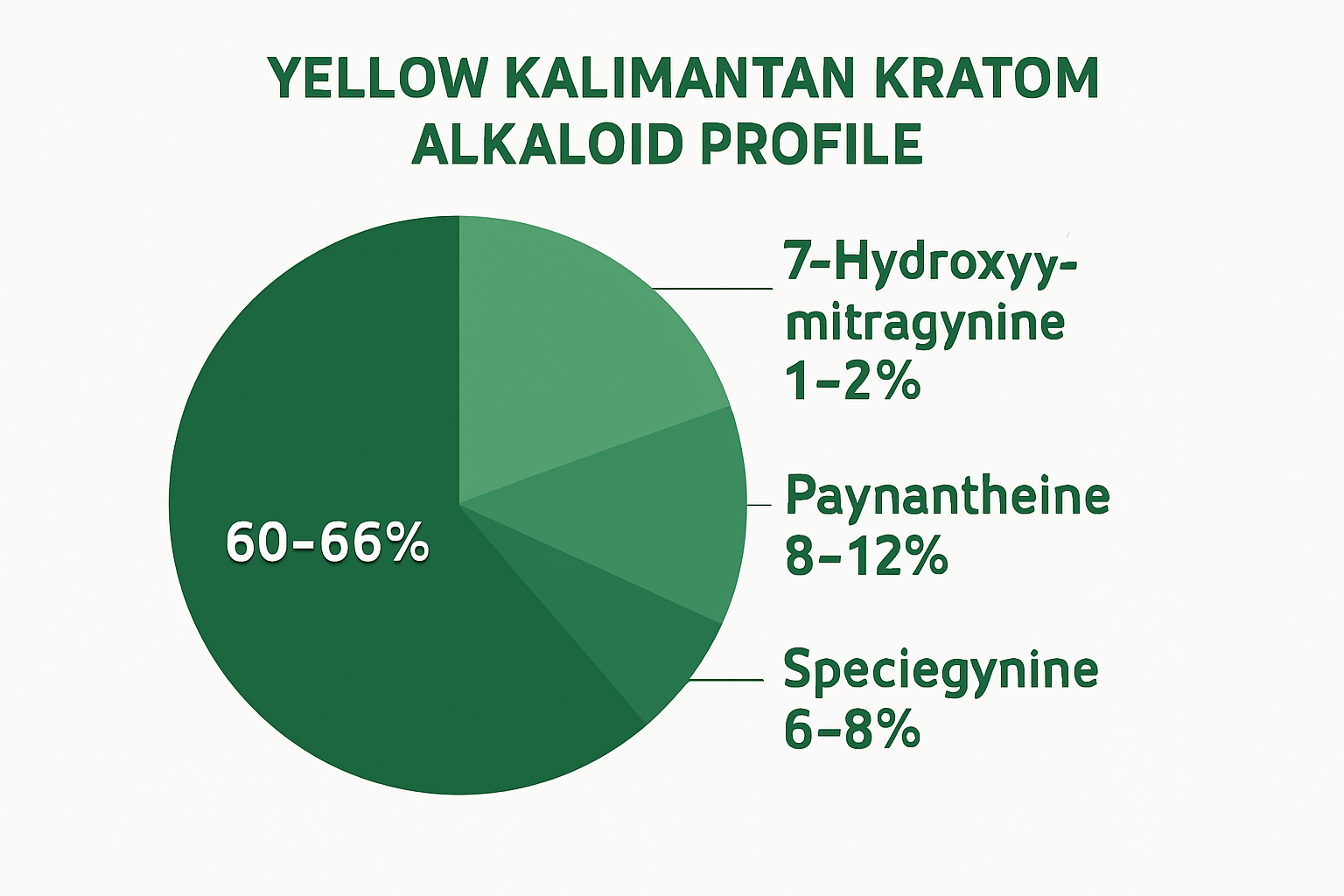
The effectiveness of yellow kalimantan kratom stems from its complex alkaloid composition. While all kratom contains mitragynine and 7-hydroxymitragynine as primary alkaloids, the processing methods used to create yellow strains can alter the ratios and presence of secondary alkaloids.

Primary Alkaloids

✅ Discover What Makes Jack Botanicals Different

AKA Approved Standards | Lab-Verified Purity | Unmatched Customer Support

💎 READER EXCLUSIVE: JACK30 = 30% Off Storewide

Start Saving Today →
AlkaloidApproximate PercentagePrimary Effects
Mitragynine60-66%Energy, focus, mild discomfort relief
7-Hydroxymitragynine1-2%Relaxation, significant discomfort relief
Speciogynine6-8%Muscle relaxation
Paynantheine8-12%Smooth muscle relaxant

Secondary Alkaloids

The fermentation and extended drying process may increase certain secondary alkaloids, including:

  • Speciociliatine – contributes to balanced effects
  • Corynantheidine – may enhance mood-lifting properties
  • Mitraphylline – potential muscle relaxant properties
  • Rhynchophylline – may support cardiovascular health

These compounds work synergistically in what researchers call the “entourage effect,” where multiple alkaloids interact to produce effects greater than any single compound alone.

Effects and Benefits of Yellow Kalimantan Kratom

Understanding the potential effects of yellow kalimantan kratom helps users determine whether this strain aligns with their wellness goals. The balanced nature of this variety makes it versatile for different situations and times of day.

Energy and Focus Effects ⚡

Many users report that yellow kalimantan kratom provides:

  • Moderate energy boost without excessive stimulation
  • Enhanced mental clarity and concentration
  • Improved productivity for work or study sessions
  • Sustained focus that doesn’t lead to jitteriness

Unlike highly stimulating white vein strains, yellow Kalimantan typically offers gentler energy that feels more natural and sustainable throughout the day.

Mood Enhancement and Well-Being

The mood-supporting properties of this strain include:

  • Positive outlook and general sense of well-being
  • Social comfort in group settings
  • Stress relief without excessive sedation
  • Emotional balance during challenging times

These effects make yellow kalimantan kratom popular among those seeking natural mood support while maintaining functionality in daily activities.

Discomfort Relief Properties

While not as potent as red vein strains for significant discomfort, yellow Kalimantan offers:

  • Mild to moderate discomfort relief
  • Muscle tension reduction
  • Physical comfort during extended activities
  • Recovery support after physical exertion

The balanced alkaloid profile provides enough discomfort-relieving properties to be helpful without causing excessive drowsiness.

Relaxation Without Sedation

One of the most appreciated aspects of yellow kalimantan kratom is its ability to promote relaxation while maintaining alertness:

  • Calm focus rather than sedation
  • Reduced anxiety without mental fog
  • Physical ease combined with mental clarity
  • Evening use that doesn’t interfere with sleep preparation

This makes it suitable for afternoon or early evening use when you want to unwind but still need to remain functional.

Dosage Guidelines for Yellow Kalimantan Kratom
A square infographic (1024x1024) showing the alkaloid composition of yellow kalimantan kratom. Display a pie chart or bar graph with the mai

Proper dosing is crucial for experiencing the desired effects of yellow kalimantan kratom while minimizing potential side effects. Individual responses vary based on body weight, tolerance, metabolism, and sensitivity to alkaloids.

Beginner Dosage Recommendations

For those new to kratom or this specific strain:

  • Starting dose: 1-2 grams
  • Low dose: 2-3 grams
  • Purpose: Assess individual sensitivity and response
  • Timing: Wait at least 4-6 hours between doses

Starting low allows you to gauge how your body responds to this particular strain’s alkaloid profile.

Intermediate Dosage

For users with some kratom experience:

  • Moderate dose: 3-5 grams
  • Effects: Balanced energy, mood enhancement, mild discomfort relief
  • Duration: 4-6 hours typically
  • Frequency: 1-2 times daily maximum

This range typically provides the most balanced effects that yellow kalimantan kratom is known for.

Advanced Dosage

Experienced users may find effectiveness at:

  • Higher dose: 5-8 grams
  • Effects: More pronounced relaxation and discomfort relief
  • Considerations: Increased risk of side effects
  • Tolerance: Regular monitoring needed

⚠️ Important: Higher doses increase the likelihood of side effects including nausea, dizziness, and drowsiness. Always use the minimum effective dose.

Dosage Timing and Frequency

To maximize benefits and minimize tolerance development:

  • Morning use: 2-4 grams for energy and focus
  • Afternoon use: 3-5 grams for sustained productivity
  • Evening use: 4-6 grams for relaxation
  • Rest days: Take 1-2 days off per week minimum

Rotating strains, such as alternating with green kalimantan kratom, can help prevent tolerance buildup and maintain effectiveness.

Yellow Kalimantan Kratom Dosage Calculator

Yellow Kalimantan Kratom Dosage Calculator

Find your recommended dosage based on experience and goals

Your Recommended Dosage

0
Grams
💡 Recommendation
⚠️ Always start with the lower end of the recommended range. Wait at least 45-60 minutes to assess effects before considering additional amounts. Individual responses vary.

Comparing Yellow Kalimantan to Other Kratom Strains

Understanding how yellow kalimantan kratom compares to other popular strains helps users make informed choices based on their specific needs and preferences.

Yellow Kalimantan vs Green Kalimantan

Both strains originate from the same region but offer distinct experiences:

Yellow Kalimantan:

  • More balanced energy profile
  • Smoother, less stimulating
  • Longer-lasting effects
  • Better for all-day use

Green Kalimantan:

  • More energizing
  • Sharper focus enhancement
  • Shorter duration
  • Better for specific tasks

Those interested in comparing these varieties directly can explore green kalimantan kratom for detailed information.

Yellow Kalimantan vs Yellow Sumatra

Both yellow strains share processing similarities but differ in origin:

CharacteristicYellow KalimantanYellow Sumatra
OriginBorneo (Kalimantan)Sumatra
Energy LevelModerateModerate-High
Duration4-6 hours5-7 hours
RelaxationBalancedSlightly more pronounced
Best ForDaytime productivityEvening relaxation

For those considering Sumatra varieties, yellow sumatra kratom offers complementary information.

Yellow Kalimantan vs Gold Sumatra

Gold and yellow strains often overlap in processing but have subtle differences:

Similarities:

  • Both undergo fermentation
  • Balanced alkaloid profiles
  • Suitable for various times of day
  • Mild to moderate potency

Differences:

  • Gold Sumatra typically offers more sedating qualities
  • Yellow Kalimantan provides cleaner energy
  • Processing methods may vary by vendor

Learn more about gold sumatra kratom to understand these nuanced differences.

Yellow Kalimantan vs Red and White Veins

The yellow variety occupies a unique middle ground:

Compared to Red Veins:

  • Less sedating
  • More energizing
  • Milder discomfort relief
  • Better daytime functionality

Compared to White Veins:

  • Less stimulating
  • More relaxing
  • Smoother energy curve
  • Less anxiety potential

This balanced profile makes yellow kalimantan kratom an excellent choice for those who find red strains too sedating and white strains too stimulating.

Quality Considerations and Vendor Selection

The quality of yellow kalimantan kratom varies significantly between suppliers, making vendor selection crucial for safety, effectiveness, and value.

Signs of High-Quality Yellow Kalimantan Kratom

Look for these indicators when evaluating products:

✅ Fresh, earthy aroma without mustiness or chemical smells
✅ Fine, consistent powder texture with minimal stems or debris
✅ Vibrant color ranging from light tan to golden-yellow
✅ Third-party lab testing for alkaloid content and contaminants
✅ Proper packaging with sealed, moisture-resistant containers
✅ Clear strain information including harvest date and origin

Red Flags to Avoid

Be cautious of vendors displaying these warning signs:

❌ Unusually low prices compared to market average
❌ Lack of testing documentation or certificates
❌ Vague product descriptions without origin details
❌ No customer reviews or testimonials
❌ Poor packaging or unlabeled products
❌ Exaggerated health claims

Lab Testing and Safety Standards

Reputable vendors provide documentation showing:

  • Alkaloid content analysis (mitragynine and 7-hydroxymitragynine percentages)
  • Heavy metal testing (lead, arsenic, mercury, cadmium)
  • Microbial contamination screening (salmonella, E. coli, mold)
  • Pesticide residue testing
  • Batch-specific results with lot numbers

These tests ensure you’re receiving safe, pure yellow kalimantan kratom without harmful contaminants.

Finding Reputable Vendors

When searching for quality sources:

  1. Research vendor reputation through community forums and reviews
  2. Verify third-party testing availability
  3. Check for American Kratom Association (AKA) GMP certification
  4. Compare prices across multiple suppliers
  5. Start with small sample sizes before bulk purchases

For those exploring various sources, understanding where to get kratom from quality vendors provides valuable guidance on vendor selection.

Storage and Shelf Life

Proper storage maintains potency and freshness:

  • Airtight containers to prevent moisture exposure
  • Cool, dark locations away from direct sunlight
  • Refrigeration for long-term storage (optional)
  • Vacuum sealing for bulk quantities
  • Label dating to track freshness

Properly stored yellow kalimantan kratom maintains potency for 1-3 years, though fresher is always better.

Legal Status and Regulations

Understanding the legal landscape surrounding yellow kalimantan kratom is essential before purchasing or using any kratom products.

Federal Legal Status

At the federal level in the United States, kratom remains legal and unscheduled by the DEA as of 2025. However, the FDA has not approved kratom for any medical use and continues to monitor its safety profile.

State-by-State Regulations

Kratom legality varies significantly by state:

States Where Kratom is Legal:

  • Most U.S. states allow kratom possession and sale
  • Some states have age restrictions (typically 18+)
  • Quality standards may vary by jurisdiction

States with Restrictions or Bans:

  • A handful of states have banned kratom entirely
  • Some counties and cities have local ordinances
  • Regulations continue to evolve

For specific information about your location, check current U.S. state kratom laws and Alaska kratom regulations as examples of state-specific guidance.

International Considerations

For those traveling or living abroad:

  • Indonesia (origin country): Legal to grow and export, but domestic sale restrictions exist
  • Thailand: Recently legalized after decades of prohibition – learn about kratom in Thailand
  • European Union: Legal status varies by country
  • Canada: Legal but not approved for human consumption
  • Australia: Controlled substance in most territories

Always verify current regulations before purchasing, possessing, or traveling with yellow kalimantan kratom.

Advocacy and Regulation Efforts

The American Kratom Association (AKA) works to:

  • Promote the Kratom Consumer Protection Act (KCPA)
  • Establish GMP standards for vendors
  • Advocate for responsible regulation
  • Educate lawmakers and the public
  • Protect consumer access to quality products

Supporting these efforts helps ensure continued legal access to yellow kalimantan kratom and other strains.

Potential Side Effects and Safety Considerations

While many users tolerate yellow kalimantan kratom well, understanding potential side effects and safety considerations is crucial for responsible use.

Common Side Effects

At appropriate doses, some users may experience:

  • Mild nausea (especially on an empty stomach)
  • Dizziness or lightheadedness
  • Dry mouth and increased thirst
  • Constipation with regular use
  • Headaches (typically from dehydration)
  • Sleep disturbances if taken too late in the day

These effects are generally mild and often resolve by adjusting dosage or timing.

Less Common Adverse Effects

At higher doses or with frequent use:

  • Significant nausea and vomiting
  • Sweating and hot flashes
  • Itching or skin sensitivity
  • Tremors or shakiness
  • Increased urination
  • Eye wobbles (nystagmus)

If you experience severe or persistent side effects, discontinue use and consult a healthcare provider.

Tolerance and Dependence Considerations

Regular use of yellow kalimantan kratom may lead to:

Tolerance Development:

  • Reduced effects at the same dosage
  • Need for higher amounts over time
  • Diminished alkaloid sensitivity
  • Reduced effectiveness of benefits

Dependence Potential:

  • Physical adaptation to regular use
  • Withdrawal symptoms upon cessation
  • Psychological habit formation
  • Difficulty discontinuing use

To minimize these risks:

  • Take regular tolerance breaks (2-3 days per week minimum)
  • Rotate between different strains
  • Use the minimum effective dose
  • Avoid daily use when possible

For those concerned about dependence, understanding kratom detox timelines provides helpful context.

Drug Interactions and Contraindications

Yellow kalimantan kratom may interact with:

  • CNS depressants (alcohol, benzodiazepines, opioids)
  • Stimulants (caffeine, amphetamines)
  • Antidepressants (SSRIs, MAOIs)
  • Blood pressure medications
  • Liver enzyme medications

Avoid kratom if you:

  • Are pregnant or breastfeeding
  • Have liver or kidney disease
  • Have cardiovascular conditions
  • Take medications metabolized by CYP450 enzymes
  • Have a history of substance abuse disorders

Always consult healthcare providers before combining yellow kalimantan kratom with medications or if you have pre-existing health conditions.

Safe Use Guidelines

Follow these principles for responsible use:

🔹 Start low, go slow – Begin with minimal doses
🔹 Stay hydrated – Drink plenty of water throughout the day
🔹 Eat properly – Don’t take on a completely empty stomach
🔹 Monitor effects – Keep a journal of doses and responses
🔹 Take breaks – Regular rest days prevent tolerance
🔹 Source quality – Only purchase from reputable vendors
🔹 Avoid mixing – Don’t combine with other substances
🔹 Listen to your body – Adjust or discontinue if problems arise

Methods of Consumption

Yellow kalimantan kratom can be consumed through various methods, each offering different advantages in terms of convenience, taste, and onset time.

Toss and Wash Method

The most common consumption method:

Procedure:

  1. Measure your dose carefully
  2. Place powder on your tongue
  3. Immediately wash down with water or juice
  4. Follow with additional liquid

Advantages:

  • Fast onset (20-30 minutes)
  • No preparation required
  • Full alkaloid absorption
  • Cost-effective

Disadvantages:

  • Unpleasant taste for many users
  • Risk of choking if not done carefully
  • Powder texture can be difficult

Kratom Tea

A traditional preparation method:

Procedure:

  1. Simmer yellow kalimantan kratom in water for 15-20 minutes
  2. Strain out plant material
  3. Add honey, lemon, or sweetener to taste
  4. Drink warm or cold

Advantages:

  • More pleasant taste
  • Ritual aspect enhances experience
  • Easier on the stomach
  • Can be prepared in batches

Disadvantages:

  • Slightly longer onset
  • Some alkaloid loss during heating
  • Requires preparation time
  • May reduce potency

Capsule Form

Pre-measured convenience:

Advantages:

  • No taste issues
  • Precise dosing
  • Portable and discreet
  • Easy to take

Disadvantages:

  • Slower onset (30-45 minutes)
  • More expensive than powder
  • Requires swallowing multiple capsules
  • Potential for reduced absorption

Mixed in Food or Beverages

Blending into consumables:

Popular options:

  • Smoothies and protein shakes
  • Yogurt or applesauce
  • Chocolate milk
  • Orange juice
  • Coffee or chai tea

Tips for best results:

  • Use strongly flavored liquids to mask taste
  • Mix thoroughly to prevent clumping
  • Consume relatively quickly
  • Follow with additional liquid

For those interested in ready-made options, exploring where to buy kratom drinks offers convenient alternatives.

Oblate Discs

An increasingly popular method:

Procedure:

  1. Place dose in the center of an edible film disc
  2. Gather edges and twist to create a pouch
  3. Swallow with water like a capsule

Advantages:

  • No taste exposure
  • Faster than capsules
  • Easy to use
  • Inexpensive

Disadvantages:

  • Requires purchasing oblate discs
  • Learning curve for wrapping technique
  • Must swallow quickly before dissolving

User Experiences and Community Insights

User Experiences and Community Insights

While individual responses vary, patterns emerge from the collective experiences of yellow kalimantan kratom users across various communities and forums.

Common Positive Experiences

Users frequently report:

Energy and Productivity:

  • “Clean energy without jitters or anxiety”
  • “Perfect for getting through work without feeling wired”
  • “Helps me focus on tasks for hours”
  • “More natural feeling than coffee”

Mood and Social Benefits:

  • “Lifts my mood without making me feel altered”
  • “More comfortable in social situations”
  • “Balanced emotional state throughout the day”
  • “Helps me stay positive during stressful times”

Physical Comfort:

  • “Mild discomfort relief that doesn’t make me drowsy”
  • “Helps with muscle tension after workouts”
  • “Comfortable body sensation without sedation”
  • “Good for active recovery days”

Dosage Sweet Spots

Community consensus suggests:

  • 2-3 grams: Best for energy, focus, and mild mood lift
  • 3-5 grams: Optimal balanced effects for most users
  • 5-7 grams: More pronounced relaxation and discomfort relief
  • Above 7 grams: Increased side effects often outweigh benefits

Most experienced users find their ideal dose within the 3-5 gram range for yellow kalimantan kratom.

Comparison to Other Yellow Strains

Users who’ve tried multiple yellow varieties note:

“Yellow Kalimantan feels more balanced than Yellow Vietnam, which I find more energizing. It’s smoother than Yellow Maeng Da but more noticeable than Yellow Borneo.”

“Compared to yellow sumatra kratom, Kalimantan gives me better focus while Sumatra is more relaxing.”

Best Use Cases

The community identifies ideal scenarios:

✨ Work and Study:

  • Long work sessions requiring sustained focus
  • Creative projects needing both energy and calm
  • Study sessions without excessive stimulation
  • Afternoon productivity without coffee jitters

✨ Social Situations:

  • Gatherings where you want to feel comfortable
  • Conversations requiring presence and engagement
  • Activities requiring both energy and relaxation
  • Events where you need to remain functional

✨ Physical Activities:

  • Moderate exercise sessions
  • Yoga or stretching routines
  • Outdoor activities like hiking
  • Recovery days between intense workouts

Challenges and Solutions

Common issues and community-recommended solutions:

Problem: Nausea at higher doses
Solution: Reduce dose, take with light food, try ginger tea

Problem: Effects too subtle
Solution: Ensure quality source, try on empty stomach, verify freshness

Problem: Tolerance building quickly
Solution: Implement rotation schedule, take regular breaks, reduce frequency

Problem: Inconsistent batches
Solution: Buy from reputable vendors, request lab tests, try sample sizes first

Comparing Ready-Made Kratom Products

For those seeking convenience, various prepared yellow kalimantan kratom products offer alternatives to traditional powder.

Kratom Drinks and Shots

Pre-made liquid options:

Advantages:

  • No preparation needed
  • Consistent dosing
  • Pleasant flavors available
  • Portable and discreet

Considerations:

  • More expensive per dose
  • May contain additives
  • Shorter shelf life
  • Limited vendor selection

Exploring options for kratom drinks can provide convenient alternatives for on-the-go use.

Extract Products

Concentrated forms of yellow kalimantan kratom:

Types:

  • Powder extracts (10x, 20x, 50x)
  • Resin extracts
  • Enhanced blends
  • Tinctures

Important Notes:

  • Much more potent than regular powder
  • Require significantly smaller doses
  • Higher tolerance risk
  • Best for experienced users only
  • More expensive

Recommended approach: Stick with standard powder until you have extensive experience with kratom.

Capsule Varieties

Different encapsulation options:

Standard Capsules:

  • 500mg or 1000mg sizes
  • Gelatin or vegetarian options
  • Pre-measured convenience
  • Various brands available

Enhanced Capsules:

  • Mixed with extracts
  • Proprietary blends
  • Higher potency
  • Premium pricing

For most users, standard yellow kalimantan kratom powder in capsules provides the best balance of convenience and value.

Vendor-Specific Products

Some vendors offer unique preparations:

  • Crushed leaf – traditional form, longer lasting
  • Stem and vein – different alkaloid profile
  • Blends – yellow Kalimantan mixed with complementary strains
  • Specialty formats – tablets, gummies, or other innovations

When exploring vendor options, researching quality sources like Garuda Kratom helps ensure product quality and reliability.

Yellow Kalimantan Kratom – FaQs


What is Yellow Kalimantan Kratom?

Yellow Kalimantan Kratom is a kratom variety associated with leaves sourced from the Kalimantan region of Borneo. The term “yellow” typically refers to a post-harvest processing approach rather than a naturally yellow leaf. Many users describe it as sitting between white and green varieties in character.

How is Yellow Kalimantan Kratom made?

  • Leaves are harvested from mature kratom trees in Kalimantan.
  • The leaves are partially dried using controlled methods.
  • Some producers use light fermentation or extended drying.
  • The final powder develops a lighter, yellowish tone.

What does Yellow Kalimantan Kratom typically feel like?

User discussions often describe Yellow Kalimantan Kratom as balanced and mild compared to other varieties. It is commonly noted for offering a middle-ground experience without being overly stimulating or overly calming. Individual experiences can vary based on factors such as personal sensitivity and preparation method.

How is Yellow Kalimantan different from green or white kratom?

  • Yellow varieties are defined more by processing than leaf vein color.
  • Green kratom is usually dried quickly with minimal processing.
  • White kratom often uses younger leaves or longer drying.
  • Yellow Kalimantan is often described as a blend-like profile.

Is Yellow Kalimantan Kratom natural?

Yes, Yellow Kalimantan Kratom is considered natural in the sense that it comes from kratom leaves without synthetic additives. The yellow label reflects a drying or curing technique used after harvesting. These methods aim to influence the final characteristics while keeping the plant material itself unchanged.

What does Yellow Kalimantan Kratom taste like?

The taste of Yellow Kalimantan Kratom is often described as earthy with slightly smoother notes compared to some green or white varieties. While bitterness is still present, some users find it less sharp. Taste can vary depending on freshness, grind, and how it is prepared.

How do people commonly use Yellow Kalimantan Kratom?

  • Mixing the powder with water or juice.
  • Using toss-and-wash methods.
  • Brewing as a warm or cold tea.
  • Encapsulating for measured intake.

Is Yellow Kalimantan Kratom suitable for beginners?

Some beginners consider Yellow Kalimantan Kratom approachable due to its reputation for being moderate rather than intense. However, suitability depends on individual preferences and tolerance. New users often start with small amounts and observe how they personally respond before making adjustments.

Where does Yellow Kalimantan Kratom come from?

Yellow Kalimantan Kratom comes from the Kalimantan region, which is the Indonesian portion of the island of Borneo. This area is known for its dense forests and long history of kratom cultivation. Local growing conditions can influence leaf quality and consistency.

Does Yellow Kalimantan Kratom vary between vendors?

  • Drying and fermentation methods may differ.
  • Leaf maturity can vary at harvest.
  • Grinding and storage practices affect freshness.
  • Naming conventions are not standardized.

Conclusion

Yellow kalimantan kratom represents a unique and versatile option within the diverse kratom landscape. Its balanced alkaloid profile, created through specialized processing techniques in Indonesia’s Kalimantan region, offers users a middle ground between the energizing properties of white veins and the relaxing qualities of red veins. This makes it an excellent choice for those seeking sustained energy, mood enhancement, and mild discomfort relief without excessive stimulation or sedation.

Caleb Foster is a self-described earth learner with a fascination for traditional living systems and the spiritual role of nature across cultures. He has participated in heritage walks, studied ancient texts, and spoken with keepers of tradition to understand the intersection of plants, ceremony, and identity. Caleb believes that learning from the past is essential to living more intentionally in the present. His interests include seasonal observances, indigenous land practices, and communal rituals rooted in nature. Caleb offers a perspective that respects origin stories and celebrates the many ways humans have engaged with the plant world for connection and meaning.

Related Posts

Leave a Reply

Your email address will not be published. Required fields are marked *